
Crisis To Care Collaborative
from crisis
to care
When someone is experiencing a behavioral or mental health crisis, the right response can make all the difference. The Crisis to Care (CTC) Collaborative is bringing together leaders and partners from sectors across Erie County to build a more coordinated, compassionate, and effective crisis response system for our community.
Crisis to Care Collaborative Releases Major Status Report
The report analyzes how emergency call centers, police, EMS, and health providers in Erie County respond to people experiencing a mental health-related emergency. Among the findings in the report:
- Approximately three percent of calls (more than 21,000 calls in 2024) to 911 in Erie County were coded as mental health-related. First responders believe that tens of thousands of additional calls were also mental health-related but not coded as such.
- Mobile crisis teams, which make it possible for mental health clinicians to provide on-scene support to someone in crisis, have demonstrated effectiveness diverting people from the emergency department. However, staffing shortages impact the timeliness of their response and prevent them from completing more than half the visits they are deployed to.
- Buffalo police are dispatched on average more than once an hour to respond to someone experiencing a mental health emergency.
- Approximately 10,000 people went to the ECMC’s emergency department in 2024 because of a mental health emergency. In nearly half these instances, people were transported to ECMC by police or ambulance.
our goals
To ensure that people in Erie County experiencing a behavioral health emergency receive accessible, effective behavioral health crisis stabilization services and follow-up care.
To reduce the likelihood that people in Erie County experiencing a behavioral health emergency are arrested or inappropriately brought to ECMC’s Comprehensive Psychiatric Emergency Program (CPEP)
understanding the model
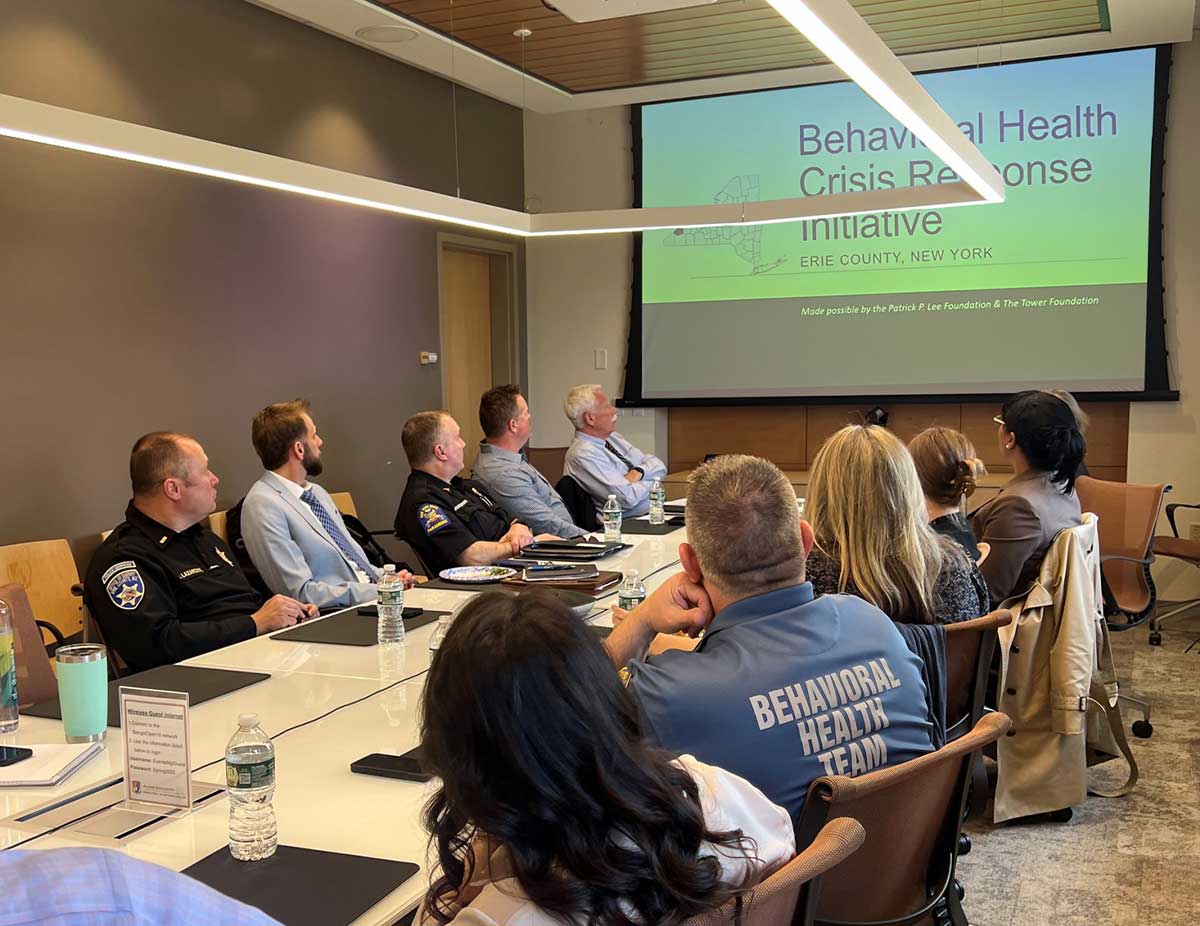
The work of the CTC Collaborative focuses on end-to-end improvements across the behavioral health crisis response continuum—from the initial call through the delivery of care. Our approach is guided by the national framework developed by the US Department of Health and Human Services – Someone to Call, Someone to Respond, and Somewhere to Go.
someone to call
Improving how behavioral health-related crisis calls are identified and process.
someone to respond
Ensuring call takers can dispatch mobile crisis teams and/or co-response units in lieu of a traditional police/fire/
EMS response.
somewhere to go
Improving access to effective stabilization services so that individuals in crisis have a place to go for immediate care.
our approach
The CTC Collaborative will be guided by these core principles:
education
Ensuring all stakeholders and community members have the knowledge they need to navigate behavioral health crises effectively
collaboration
Bringing together law enforcement, first responders, healthcare providers, community organizations, and people with lived experience to create a more effective system
transparency
An open and evolving effort – responsive to community inputs and committed to accountability and continuous improvement
results
Using data to achieve meaningful and lasting improvements to transform a broken system